Archive hit lists (V2)
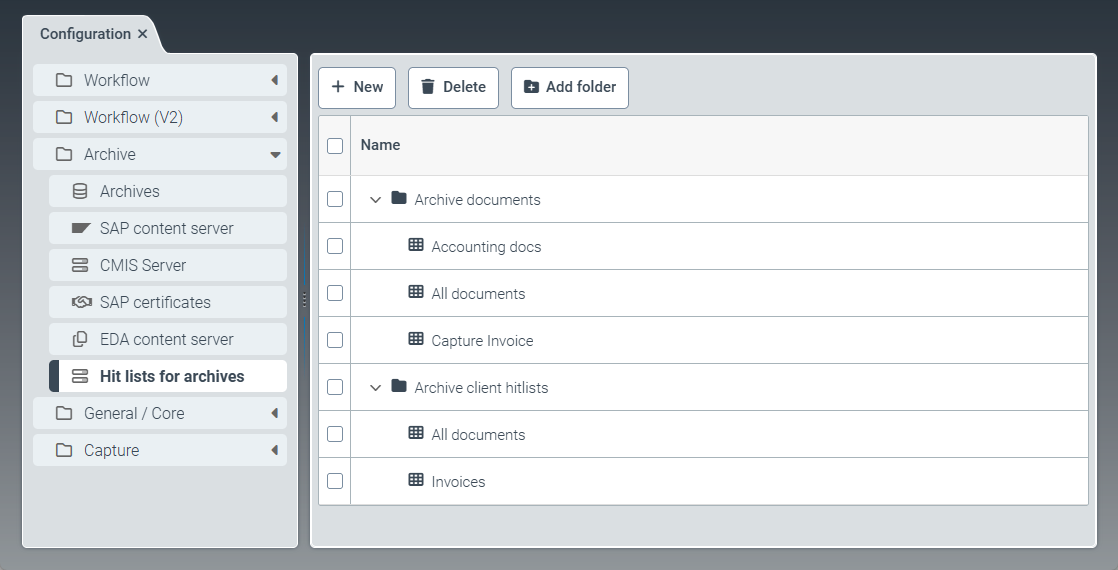 |
The Hit lists for archives menu item offers options for editing and deleting existing archive hit lists, as well as for creating new archive hit lists.
Archive hit lists are used to collect data from specific archives in a list. When configuring hit lists, you use search restrictions to define which archive data is collected in the individual hit lists.
By default, the archive hit lists are divided into the following folders:
Tip
You can create new folders by clicking on the Add folder button. You can move the folders using drag and drop.
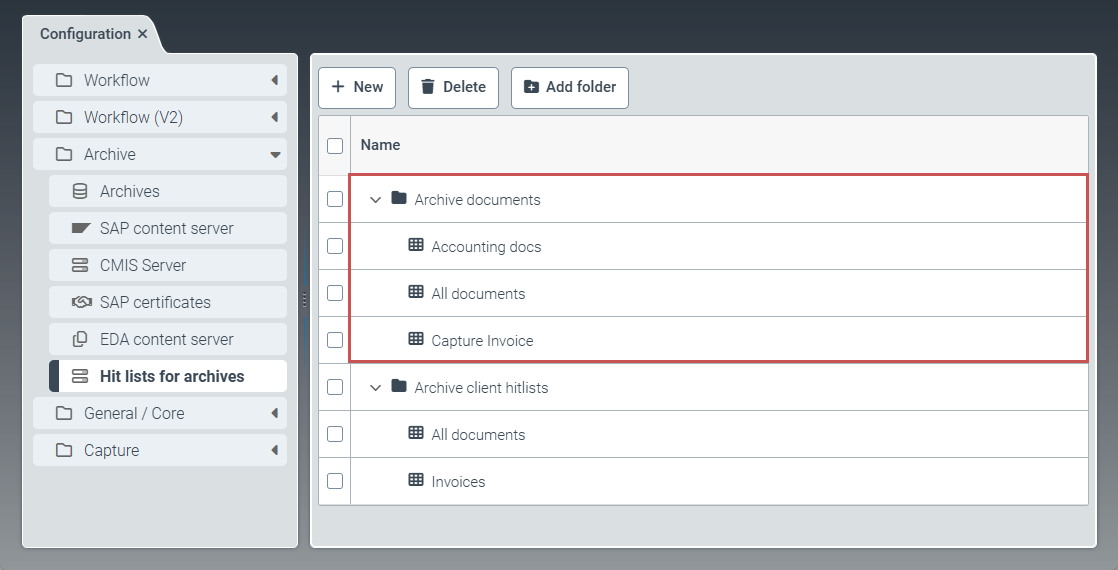
Archive documents: Hit lists for archive documents are displayed here. These hit lists are visible to users in the archive overview. The following hit lists are delivered in the standard version:
All documents: Hit list for all existing documents from all archives
Capture Invoice: Hit list for all existing documents from the sys_Invoice archive
Archive client hit lists: The hit lists for external data access are displayed here. External access can be performed, for example, via the Customer Archive API or xSuite Interface Prism. These hit lists are not visible to the user and are used exclusively for data access. The following hit lists are delivered by default:
All documents
Invoices
Notice
The Archive client hitlists folder is only displayed if you have the
sys_ConnectivityAdminrole.
Creating an archive hit list (V2)
Select the lists for archives menu item, then click on New.
➣ The Hit list: Unnamed item tab will open.
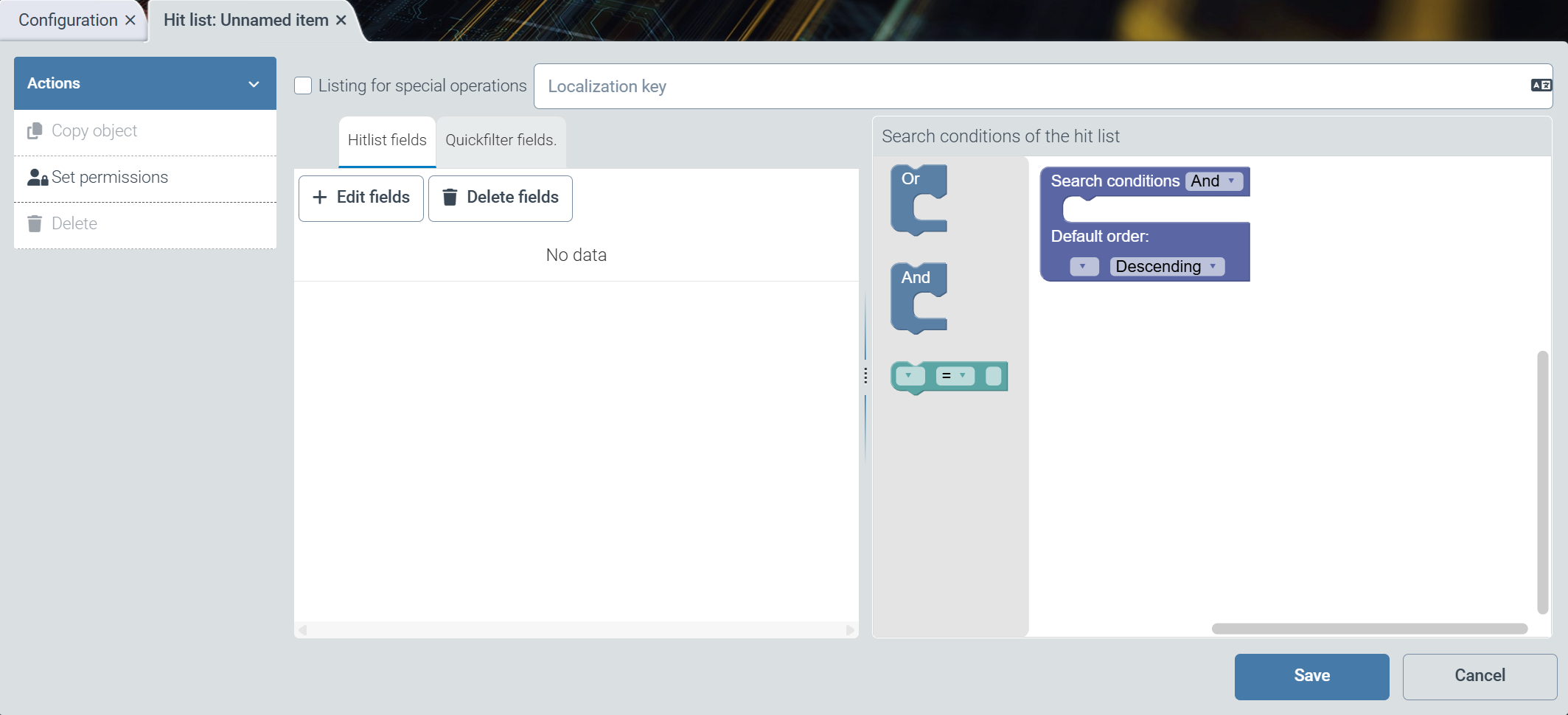
In the Localization key field, enter the localization key for the hit-list name to be displayed.
Notice
To open the Select localization dialog box, click the
 button.
For more information, see Selecting a localization.
In the action menu, click Set permissions and configure the authorizations Read, Update, Delete, and Authorize for user and administrator roles.
Click Save.
➤ The archive hit list has been created. To use the hit list, you must add fields and define search restrictions.
Caution
Newly created hit lists are automatically saved in the Archive client hitlists folder. If you want the hit list to be visible to the user, drag and drop the hit list into the Archive documents folder.
Adding fields to an archive hit list
Select Hit list fields, then click Edit fields.
➣ The Edit Fields dialog box will open.
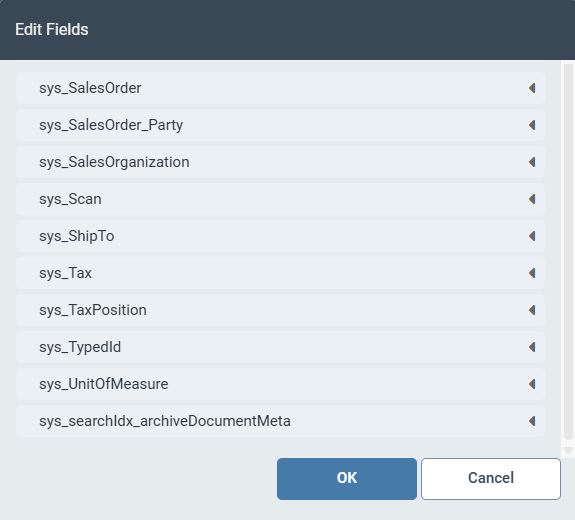
Select the checkboxes for the fields you want to add to the hit list.
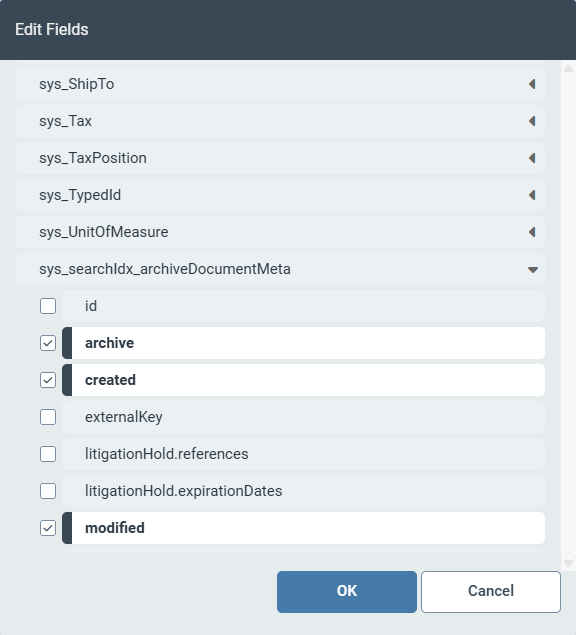
Click OK.
➣ The selected fields will be displayed under Hit list fields.
Tip
Use drag and drop to change the arrangement of the fields.
The order of the fields determines the order in which the columns of the hit list appear.
Click Save.
➤ The fields have been added to the hit list.
Adding fields for quick search
If you set up a quick search for the hit list, an extra search field will be displayed above the hit list for the user. The user can enter a search term in this field to narrow down the results even further. After entering a search term, the hit list is updated and a second search field appears, in which the user can enter another search term. In total, the quick search offers up to three filter levels for narrowing down the hit list.
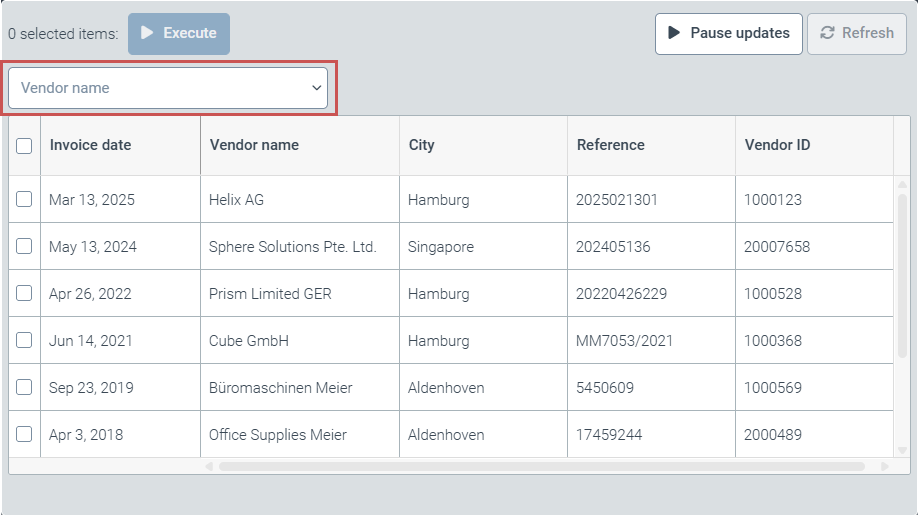
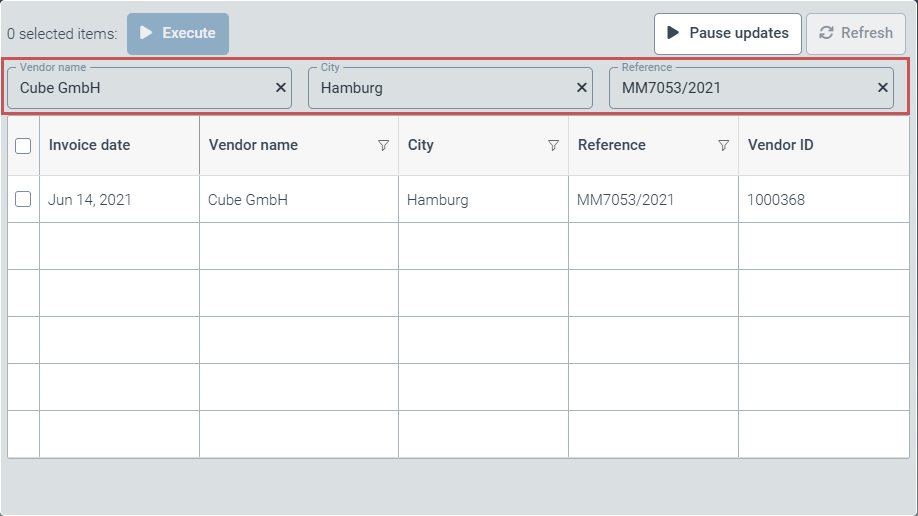
Select Quickfilter fields, then click Edit fields.
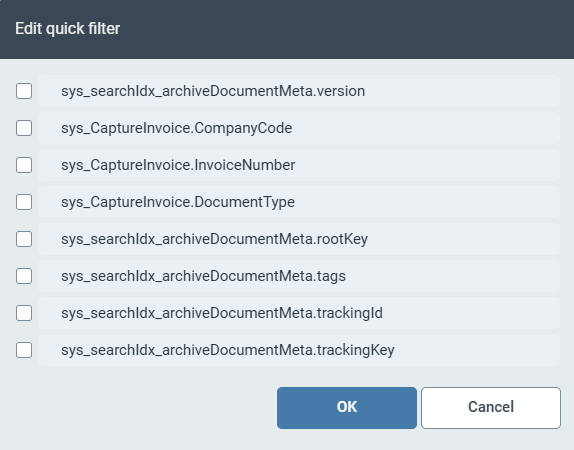
➣ The Edit quick filter dialog box will open.
Notice
For the quick search, all fields that are added to the hit list and have the field type "String" are available. You can select up to three fields for the quick search.
Select the checkboxes for the fields you want to add to the quick search.
Click OK.
➣ The selected fields will be displayed under Quickfilter fields.
Tip
Use drag and drop to change the arrangement of the fields.
The order of the searches (search priority) is tied to the sequence of the fields.
Click Save.
➤ The fields have been added for the quick search.
Defining search restrictions for an archive hit list
The search restrictions of a hit list allow you to define which data is collected and displayed in the hit list. The sorting of the data in the hit list can also be defined.
If you do not define any search restrictions, the hit list will display documents from all archives.
Select one of the following values from the Search conditions drop-down list:
And: Combines several search restrictions with an AND.Or: Combines several search restrictions with an OR.
Drag and drop a search restriction into the Search conditions editing area.
Tip
To remove an element, select the element and press Del.
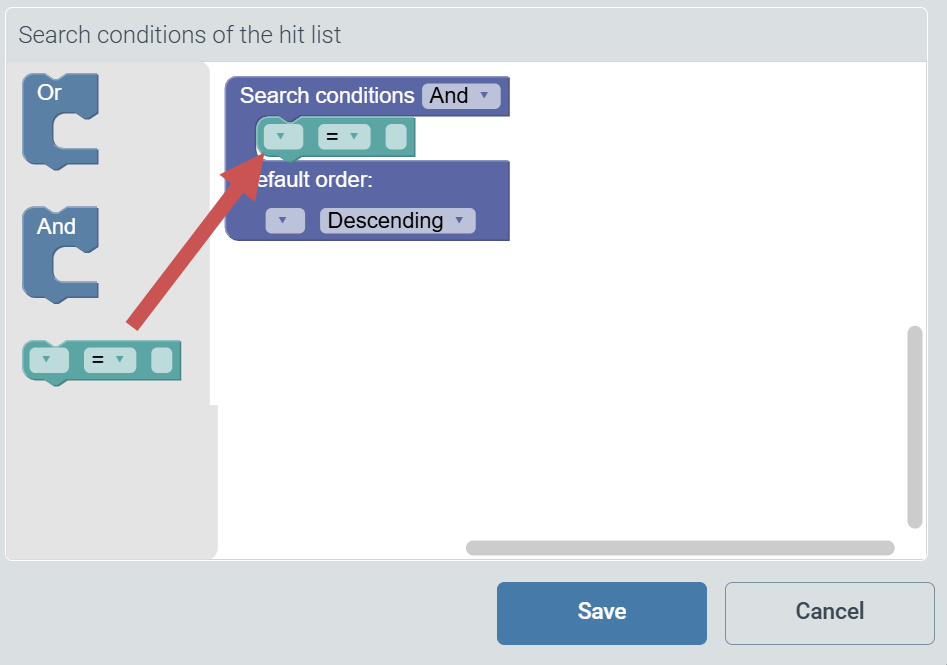
From the drop-down list on the left, select the field to be used for search restriction.
In the field on the right, enter the corresponding value.
In the middle drop-down list, select one of the following operators that links the field and the field value:
=: equals<: less than<=: less than or equal to>: greater than>=: greater than or equal to~: containsTip
Wildcards may be used to specify the field value. The following wildcards are permitted:
Asterisk (
*): Placeholder for any stringQuestion mark (
?): Placeholder for one character
To add additional search restrictions, repeat Step 2 to Step 5.
Example 2. Search restrictions for an archive hit list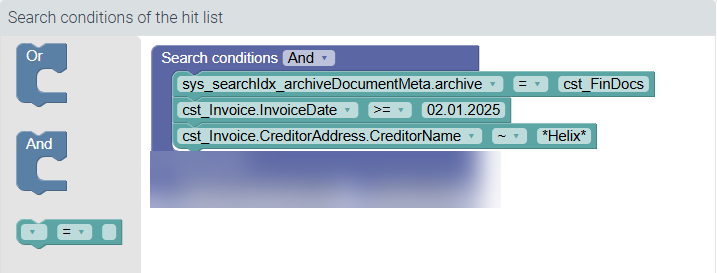
In this example, three search restrictions were added that are linked with AND.
These search restrictions will display all archive documents in the hit list that meet all of the following criteria:
The documents are located in the
cst_FinDocsarchive.The documents have an invoice date of February 1, 2025, or later.
The documents are assigned to a supplier whose name contains the substring
Helix.
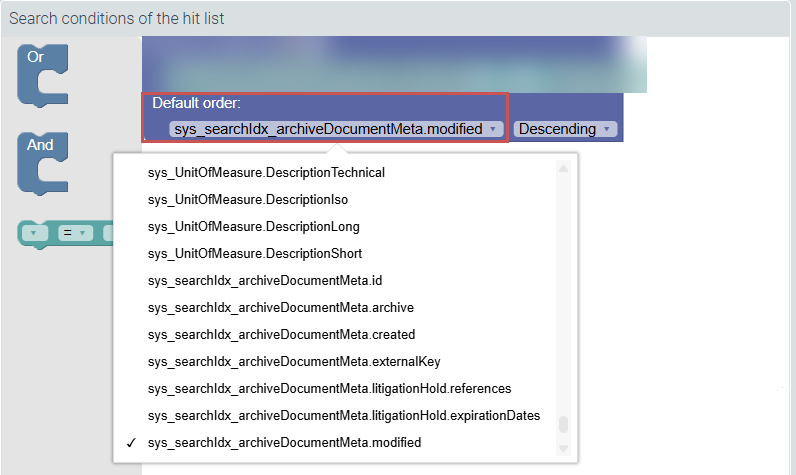
From the Default order drop-down list, select a field to use for sorting the hit list.
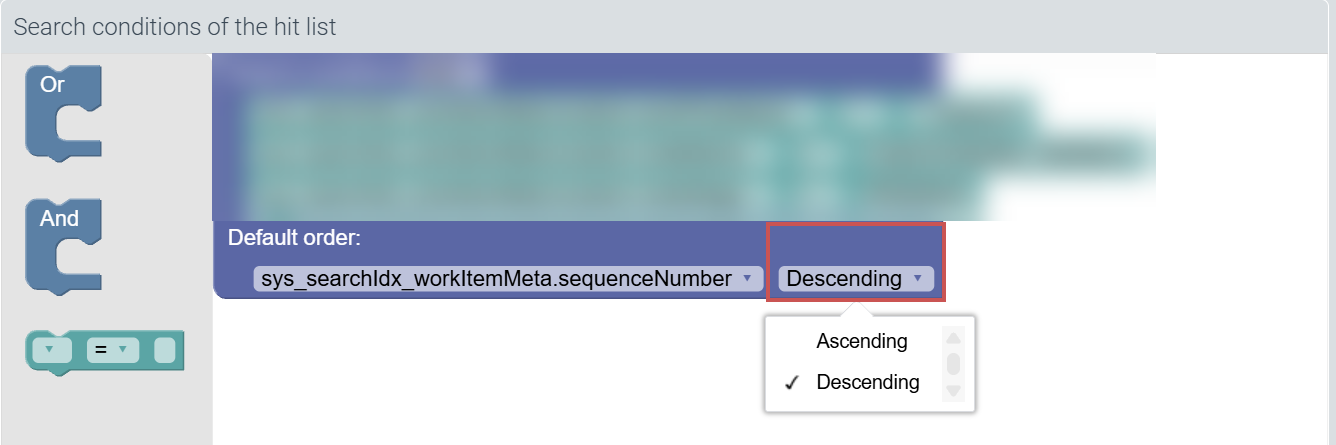
Select one of the following sort orders:
Ascending: ascending sortingDescending: descending sorting
Click Save.
➤ The search restrictions of the hit list have been defined.